Blogs have been declared “dead” more times than I can count over the years, yet they continue to quietly power careers, open doors, and build authority. Even in a world saturated with AI-generated content, personal blogs remain one of the most effective ways for developers and IT professionals to share expertise, build a reputation, and create opportunities.
Key takeaway: A consistent, well-written blog compounds your credibility and career growth over time.
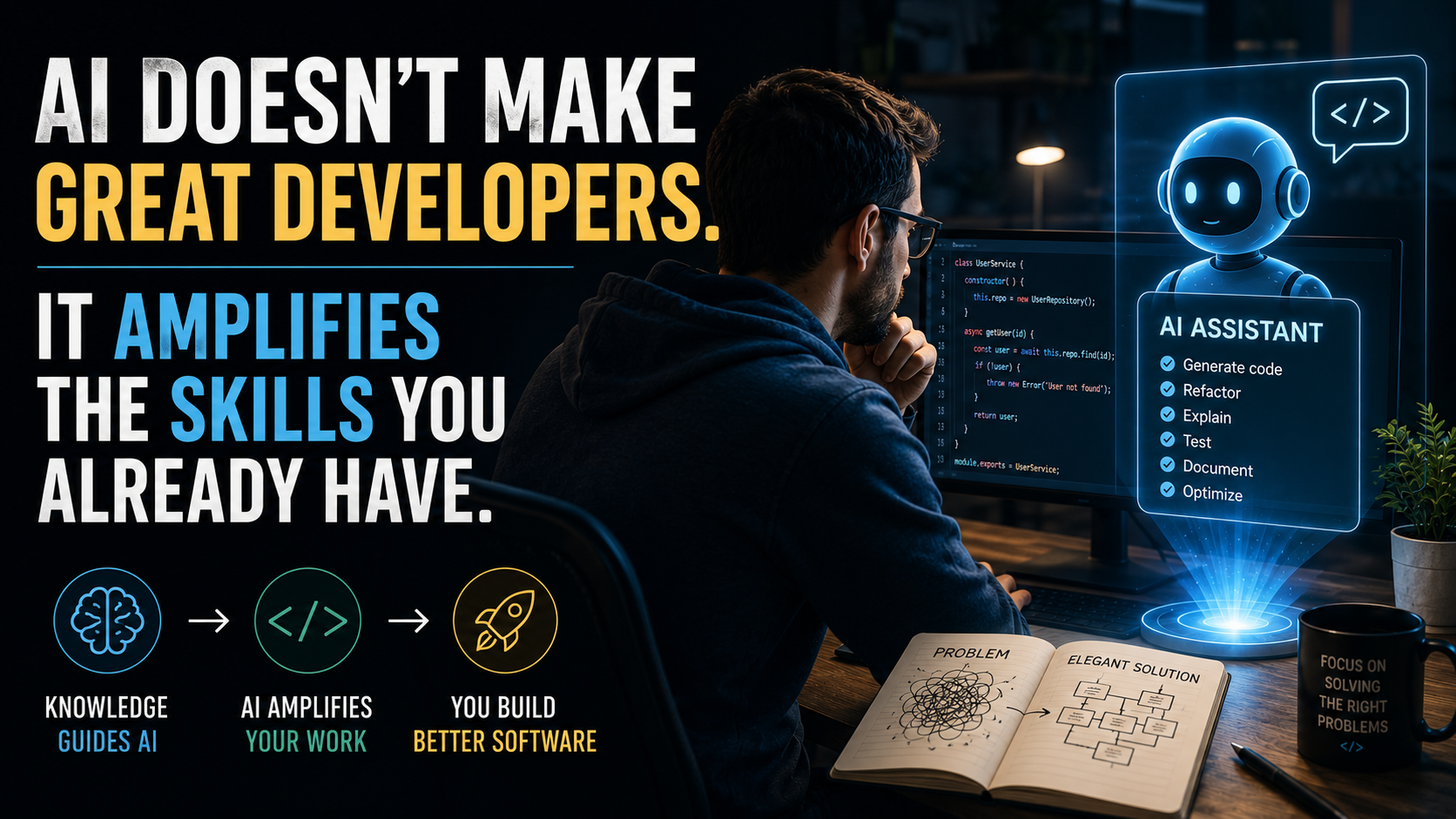
AI is everywhere—drafting docs, answering questions, writing code, and even authoring books. While AI accelerates production, it also increases noise. The result? People value trustworthy, human, experience-backed perspectives even more. A personal blog gives you a home base where your voice, expertise, and projects live beyond transient social posts and algorithmic social media feeds.
A Portfolio Gives Credibility
A blog is a portfolio of proof. It’s where you:
-
Explain how you solved problems youself.
-
Teach others with examples and insights.
-
Document learnings so future you (and everyone else) benefit.
-
Build a body of work hiring managers and clients can evaluate.
The compounding effect is real. One helpful post can be shared and referenced for years, drawing readers, recruiters, and collaborators long after you hit publish.
Why Does This Matter?
Authoring a blog or portfolio of what you know offers the following:
- Authority: Publishing teaches you to think clearly and positions you as a go-to resource.
- Discoverability: Search engines and social media shares surface your articles for others to read and benefit from.
- Career Opportunities: A blog can help attract consulting inquiries, speaking invites, and job interviews.
- Communication Skills: Writing and maintaining a blog forces you to understand concepts and articulate well enough to explain complex topics to others.
- Community Impact: Sharing improves the ecosystem, especially when you document edge cases and real-world constraints.
Practical Ways to Start (and Stick With It)
Here are some tips on starting to blog, and how to help you stick to it over time:
-
Pick a focus: Choose topics you actively work with (Azure, .NET, Python, Terraform, Kubernetes, security, etc.).
-
Write for one person: Imagine a teammate who asks you a question; then answer it with clarity.
-
Show your work: Include code samples, commands, architecture diagrams, and metrics. Maybe even a GitHub repo with the code too.
-
Keep posts small: 700–1200 words is plenty; publish consistently over perfect. Write what you have time for.
-
Use canonical references: Link to official docs when mentioning APIs, services, or specs. Also, don’t be afraid to link to other blogs.
-
Add unique value: Explain tradeoffs, gotchas, decision criteria, and share your own insights from real projects. Share your own experience for others to learn from!
-
Publish your learning journey: “What I learned fixing X” beats generic overviews or basic introductions. There are plenty of overviews and basic introductions in the documentation and other places.
-
Make it scannable: Use headings, bullets, and short paragraphs to help busy readers.
Use AI, but Don’t Be Replaced By It
AI is a powerful assistant for drafting outlines, generating examples, and finding references. Your advantage is the human layer:
-
Context: You provide the constraints and business goals that guided your solution and gave purpose to the problem being solved.
-
Judgment: Why did you choose one approach over another? What are your reasons for solving the problem the way you did?
-
Experience: What is your real world experience? The gotchas, failure modes, and lessons learned the hard way.
Optimize your productivity by combining AI speed with your unique experience and expertise, and you can build a blog that becomes both prolific and trustworthy.
Share Your Content!
Don’t stop after you’ve published. If you don’t promote your content, then how is anyone going to know about it? Feel free to share links to your posts on social media; like LinkedIn.
It’s important to get the word out and share your posts with others. You authored and published a new post that is worthy for others to read. Be sure to shamelessly promote your own content.
This is how to leverage your blog content to build credibility and catch the interest of the next hiring manager.
Conclusion
A personal blog is still one of the highest valued assets for developers and IT pros to grow their career. In an AI-heavy world, your perspective, lessons learned, and practical examples stand out. Start small, publish consistently, and let your work compound.